Soon, US Supreme Court justices’ hypocrisy will be on full display re Colorado ruling
US SUPREME COURT JUSTICES
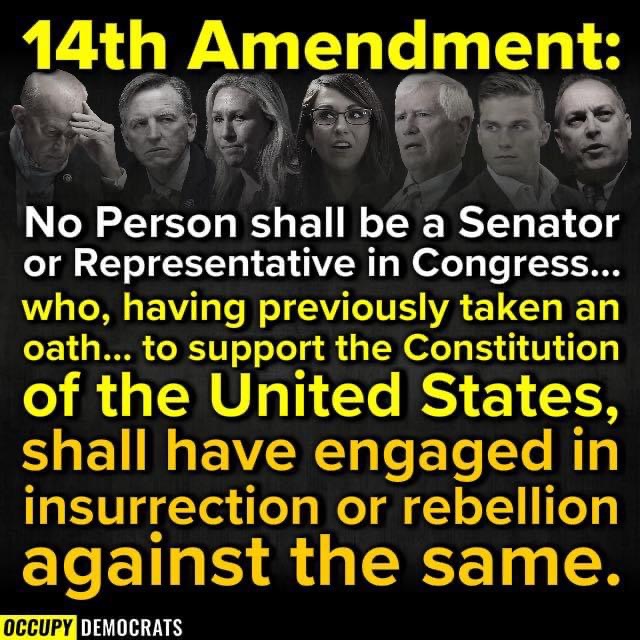
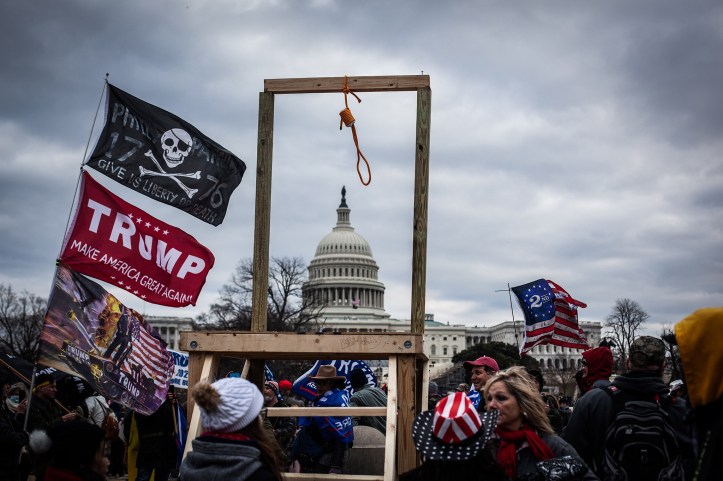
Disclaimer: Before I was permanently barred from Twitter in summer of 2022, I frequently and regularly argued that the 14th amendment, section 3, bars any elected official who has proven to have participated in the January 6, 2021 insurrection against the US Capitol in order to stop the pro forma process of counting electoral votes resulting from the November 2020 presidential elections, from holding any governmental office.
***
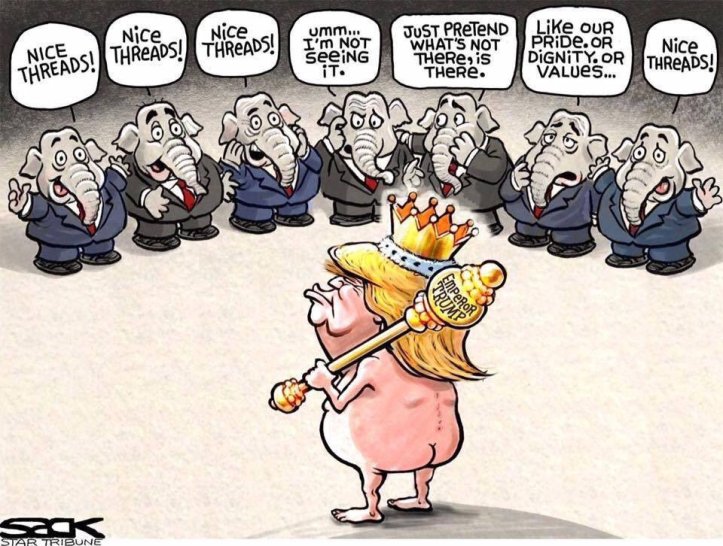
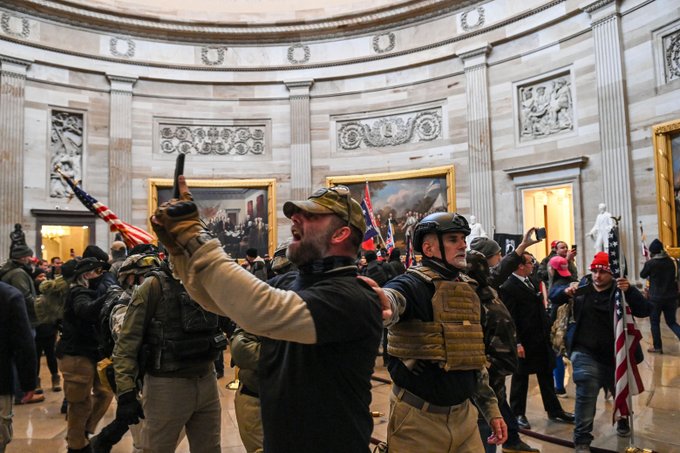
For those wondering why current republican politicians are backing the US ex-president in denouncing the Colorado Supreme Court’s ruling that bars him from seeking any future elected position because of his involvement in the January 6, 2021 insurrection, it’s because several other republican party office holders also participated in this same insurrection which means that they could be facing the same predicament.
***
And this is why I’m thinking that the US Supreme Court conservative justices who will probably be faced with reviewing this 14th amendment case, will have to do intellectual jiu-jitsu to avoid affirming the Colorado Supreme Court’s ruling. This is the model case that will expose the frailties of their past claims of relying solely on originalism and/ or textualism to arrive at their decisions. This appeal to the Colorado Supreme court was set up mostly by two Federalist Society conservative republicans, as members of CREW, to perfectly adhere to these rigid philosophies of conservative jurists.
Originalism is a conservative judicial philosophy that maintains that the only legitimate way to decide constitutional disputes is to ask how they would have been resolved when the Constitution was drafted. Textualism limits jurists to base their rulings only on what’s written in the text of a statute without consideration to outside sources, public outcries, negative consequences, etc.
On the early evening of December 19, 2023, I heard a news anchor announce that the Colorado Supreme Court in a 4-3 ruling, had decided that the US ex-President Donald Trump was disqualified from vying for the office of the US presidency within the State of Colorado because of his proven role in the insurrection against the Washington D.C. US Capitol on January 6, 2021.
These justices arrived at this conclusion based on the wording of the 14th amendment, section 3, passed in 1868, which disqualifies any office holder from seeking any elected governmental position, if he or she participated in an insurrection. This amendment had been enacted in response to what had happened, beginning in 1861 when several politicians were barred from elected governmental offices because of their participation in the Civil War.
This means that the US ex-president cannot be on the ballot for the January 5, 2024 scheduled primary election when republican party members in Colorado vote for their US presidential nominee to represent them in the November 2024 US elections, unless this Colorado Supreme Court’s decision is reversed on appeal by the final arbiter, the US Supreme Court.
Within the past couple of years, challenges in other US states have failed — most notably in Michigan and Minnesota — due to court rulings ranging from procedural inconsistencies to questions about whether the judicial branch had power to enforce the ban.
The Colorado Supreme Court accepted this case on appeal after the district court in Denver ruled against barring the ex-president from the ballot on the premise that the words “office holder’ as it appears on the 14th amendment, didn’t specifically reference the office of the US presidency.
Echoing (the constitutional scholar) Gerard Magliocca, the plaintiffs’ appeal before the Colorada Supreme Court, cited several pieces of historical evidence showing that Section 3, which was ratified in 1868 and aggressively enforced against ex-Confederates for a period of several years, was understood to apply to the president at the time.
“But in fact, both common sense and history demonstrate that Trump was an officer, an officer of the United States and an officer under the United States for constitutional purposes. Most people, even lawyers and constitutional scholars like me, do not distinguish between those specific phrases in ordinary discourse. The people who framed and ratified Section 3 saw no distinction. Exhaustive research by Trump supporters has yet to produce a single assertion to the contrary that was made in the immediate aftermath of the Civil War. Yet scholars John Vlahoplus and Gerard Magliocca are daily producing newspaper and other reports asserting that presidents are covered by Section 3.”
“Significant numbers of Republicans and Democrats in the House and Senate agreed that Donald Trump violated his oath of office immediately before, during and immediately after the events of Jan. 6, 2021. A (district court) judge in (Denver) Colorado also found that Trump “engaged in insurrection,” which was the basis for the state’s Supreme Court ruling barring him from the ballot.”
“Constitutional democracy is rule by law. Those who have demonstrated their rejection of rule by law may not apply, no matter their popularity. Jefferson Davis (Confederate president) participated in an insurrection against the United States in 1861. He was not eligible to become president of the U.S. four years later, or to hold any other state or federal office ever again. If Davis was barred from office, then the conclusion must be that Trump is too – as a man who participated in an insurrection against the United States in 2021.”
“The [Colorado] Supreme Court, in a 4-3 opinion, found that Trump is barred under a provision of the 14th Amendment that prohibits people who engaged in insurrection from running for office, based on his actions surrounding the Jan. 6, 2021, U.S. Capitol breach and riot by his supporters. “We conclude that because President Trump is disqualified from holding the office of President under Section Three (of the 14th Amendment), it would be a wrongful act under the Election Code for the Secretary to list President Trump as a candidate on the presidential primary ballot,” the court’s majority opinion says. “Therefore, the Secretary may not list President Trump’s name on the 2024 presidential primary ballot, nor may she count any write-in votes cast for him.”
“The thing for the proud “originalist” jurists in (the US Supreme Court) to do is to deny the Republican (CREW) appeal out of hand, leaving the Colorado court’s decision to stand. But that’s about as likely as Justice Clarence Thomas’ deciding to recuse himself from sitting on the case. Nevertheless, the Colorado Supremes get points for hanging Justice Neil Gorsuch with his own words (from the past).”
“The (133 page) decision is stout and learned in its defense of the 14th. It is clear, concise, and logical in its reasoning. For example, it firmly defends the right of Colorado to police its own elections.”
“Were we to adopt President Trump’s view, Colorado could not exclude from the ballot even candidates who plainly do not satisfy the age, residency, and citizenship requirements of the Presidential Qualifications Clause of Article II… It would mean that the state would be powerless to exclude a twenty-eight-year-old, a non-resident of the United States, or even a foreign national from the presidential primary ballot in Colorado. Yet, as noted, several courts have upheld states’ exclusion from ballots of presidential candidates who fail to meet the qualifications for office under Article II.”
“It also is profound in its respect for the history and, yes, for the original intent of the 14th.”
“Eric Olson, an attorney for the plaintiffs, argued that Trump and his role in the events Jan. 6 are precisely what the drafters of Section 3 — which he called the Constitution’s only “self-defense mechanism” — intended it to be used for.”
“Our Constitution is just a document,” he said. “Committing ourselves to that Constitution, the rule of law, comes with real fragility. Because our Constitution commands no armies. It has no police force.”
“Trump’s argument that because he’s popular, that should affect how we interpret Section 3 here, could not be more dangerous. Jefferson Davis would have gotten a lot of popular support right after the Civil War,” Olson added. “If we say that this conduct by this person is not enough under the Constitution, what we do is empower Trump and others to use more political violence to attack our democracy.”



 Gronda Morin