
By now most Americans are aware that on the evening of February 2, 2024, the U.S. military began its promised retaliative response because of Iranian backed fighters having recently killed 3 American soldiers in Jordan. The US has targeted and hit 85 targets at seven sites in Syria and Iraq.
US President joe Biden has warned that there will be more strikes in the near future.
As per the February 3, 2024 New York Times report by Falih Hassan, Hwaida Saad and Victoria Kim, “ U.S. Strikes Over 85 Targets at 7 Sites in Iraq and Syria Against Iran’s Forces and Proxies:”
Excerpts:
“The defense ministry said that the areas targeted were places where Syria’s military was fighting the Islamic State terrorist group, which continues to maintain an underground presence and carry out attacks inside Syria. The United States has hundreds of troops in other parts of Syria focused on fighting the remnants of Islamic State.”
“U.S. officials said they were confident the strikes had hit “exactly what they meant to hit.”
“The targets were all linked to specific attacks against U.S. troops in the region, officials said, describing them as command and control operations, intelligence centers weapons facilities and bunkers used by the Quds Force — the overseas arm of Iran’s powerful Revolutionary Guards — and affiliated militias. The Quds Force oversees Iran’s proxies around the Middle East.”
Others news updates include the status of current talks to negotiate a ceasefire between Israel and Hamas, the Iranian backed mafia-type governing group over Palestinians in Gaza since 2007. The last article is about how President Biden is considering possible action to formally recognize an independent Palestinian state.
The ceasefire proposal:
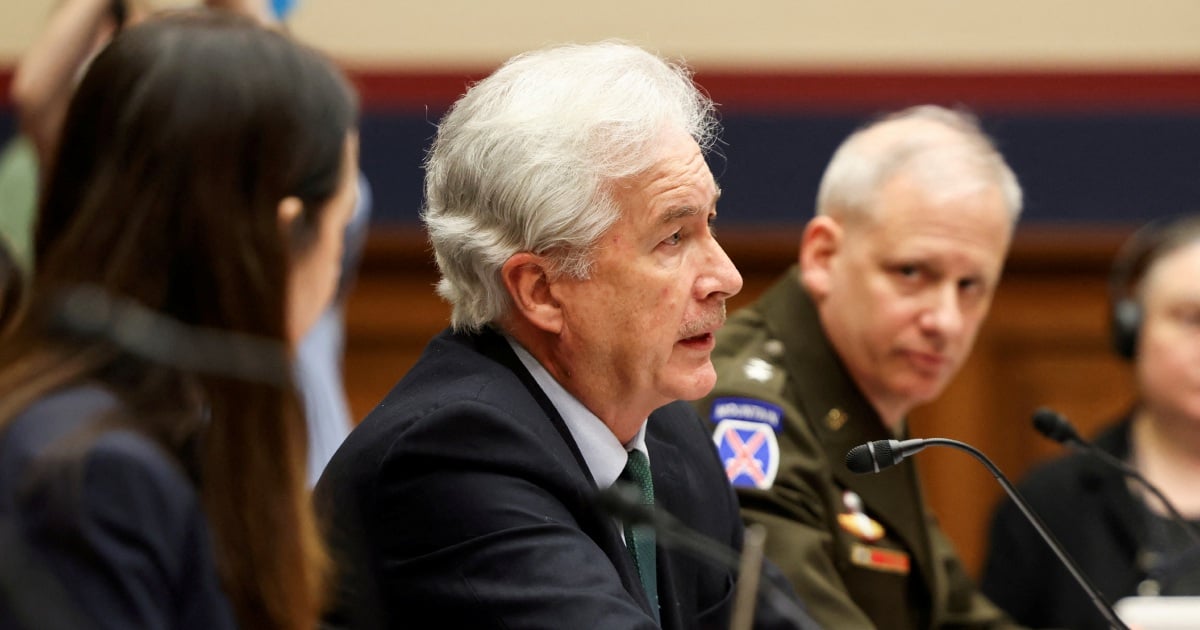
During the last week in January 2024, the US president’s administration sent the US CIA Director William Burns into the Middle East fray to help negotiate a deal between Israel and Hamas along with other intelligence heads and diplomats from Israel, Egypt and Qatar at an undisclosed location in Paris.
The focus of the negotiations included how to allow for enough time in a ceasefire to arrange for the release of the 100+ remaining hostages kidnapped by Iranian backed Hamas fighters from Gaza on October 7, 2023, as they savagely attacked Israelis and foreign citizens, killing over 1,200 and kidnapping 240.
That the heads of the intelligence agencies from the US, Israel, Egypt and Qatar gathered together in one spot is a big deal. This reality is what gives their proposal framework for a cease-fire between Isarael and Hamas for 30-60 days credence, even though the Israeli Prime Minister Benjamin “Bibi” Netanyahu with his extreme right governing partners who have long been against the existence of a Palestinian state, have been calling for the impossible mission for the outright elimination of all Hamas members in Gaza; and the Hamas leaders do not want to hear the word “temporary” in any cease-fire plan. In short, there’s some high-level strong arming going on with both sides as reflected in the fact, that neither side has yet to reject this proposal.
Because both Hamas and the Israeli leader Netanyahu are hiding their true goals, any ceasefire agreement will be a long-term project. Prime Minister Netanyahu has never backed the concept of a Palestinian state and Hamas has no desire to give up on being the ruling governing power in Gaza. Consequently, as described below, there will be numerous attempts to reach a ceasefire agreement.

As per a January 29, 2024 Haaretz report, “The Qatari Prime Minister Mohammed Al-Thani said that talks for a hostage release deal are “in a much better place than when we were a few weeks ago,” adding that there is a potential of these talks to “lead to a ceasefire permanently in the future. And this is what we are all aiming for.”

As per the January 29, 2024 Haaretz report by Ben Samuels, “Mediators to present Hamas with new hostage deal framework; includes 30-day pause in fighting:”
“Mediators will present to Hamas later today the framework for a new hostage deal according to NBC News, 24 hours after CIA chief Bill Burns participated in Paris negotiations alongside representatives from Israel, Egypt and Qatar.”
“The discussed framework, upon which the sides have reached general agreements, includes a 30-day pause which would lead to the release of remaining women, children and elderly hostages. During this phase, discussions would ensue surrounding a second 30-day phase – this would include Israeli soldiers and male civilian hostages.”
“Other elements of the deal remain unclear, including the ratio of Palestinian prisoners exchanged per hostage and the amount of humanitarian aid required to enter on a daily basis. It further remains unclear whether Hamas would accept an additional pause that does not include stipulations for a permanent cease-fire.”
.jpg?itok=K9r-dP8z)
According to the January 30, 2024 NY Times report, “Hamas’s political chief says the group is studying a new truce proposal.” This is a framework agreed upon by the United States, Israel, Qatar and Egypt which proposes a six-week cease-fire for Hamas to exchange some hostages for Palestinian prisoners.
“The political chief of Hamas, Ismail Haniyeh, announced on Tuesday that the militant group had received a proposal to pause the fighting in Gaza, after representatives from four nations agreed to present the group with a framework that would begin with a six-week cease-fire to allow for the release of more hostages.”
“Mr. Haniyeh said in a statement that Hamas was studying the proposal that had emerged from talks over the weekend in Paris, which included officials from the United States, Israel, Qatar and Egypt. Mr. Haniyeh added that Hamas had received an invitation to Cairo to discuss “the framework agreement from the Paris meeting.”
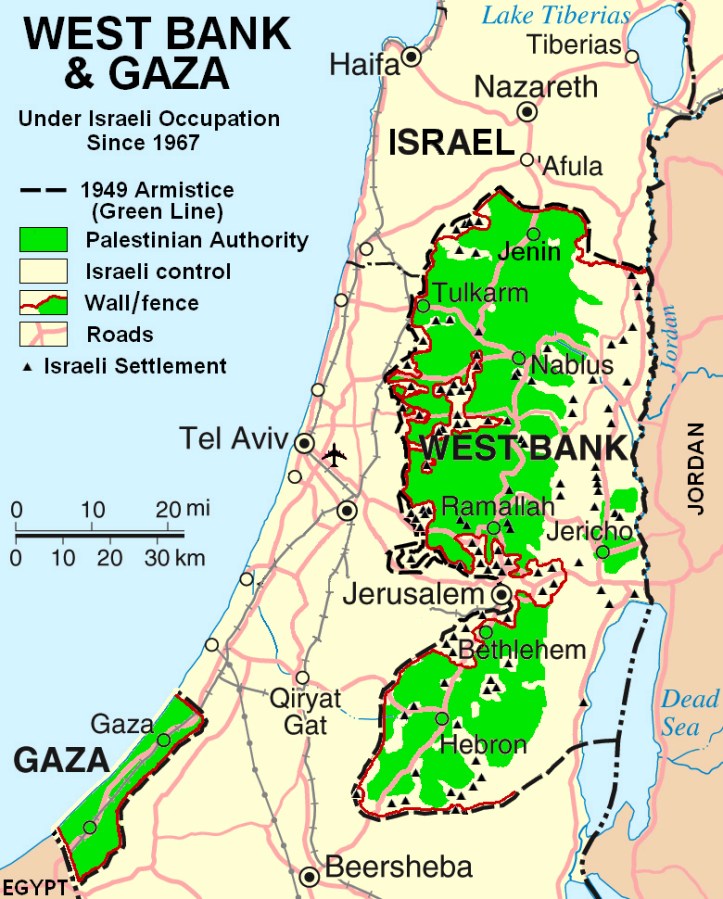
US reviewing plans to recognize Palestine as an independent state:
As per January 31, 2024 Axios report by Barak Ravid, “State Department reviewing options for recognition of Palestinian state:”
Excerpts:
“Secretary of State Tony Blinken asked the State Department to conduct a review and present policy options on possible U.S. and international recognition of a Palestinian state after the war in Gaza, two U.S. officials briefed on the issue told Axios.”
“Why it matters: While U.S. officials say there has been no policy change, the fact the State Department is even considering such options signals a shift in thinking within the Biden administration on possible Palestinian statehood recognition, which is highly sensitive both internationally and domestically.”
- “For decades, U.S. policy has been to oppose the recognition of Palestine as a state both bilaterally and in UN institutions and to stress Palestinian statehood should only be achieved through direct negotiations between Israel and the Palestinian Authority.”

“Yes but: Efforts to find a diplomatic way out of the war in Gaza has opened the door for rethinking a lot of old U.S. paradigms and policies, a U.S. official said.”
- “The Biden administration is linking possible normalization between Israel and Saudi Arabia to the creation of a pathway for the establishment of a Palestinian state as part of its post-war strategy. This initiative is based on the administration’s efforts prior to Oct. 7 to negotiate a mega-deal with Saudi Arabia that included a peace agreement between the kingdom and Israel.”
- “Saudi officials have publicly and privately made clear since Oct. 7 that any potential normalization agreement with Israel would be conditioned on the creation of an “irrevocable” pathway toward a Palestinian state.”
- “Some inside the Biden administration are now thinking recognition of a Palestinian state should possibly be the first step in negotiations to resolve the Israeli-Palestinian conflict instead of the last, the senior U.S. official said.”
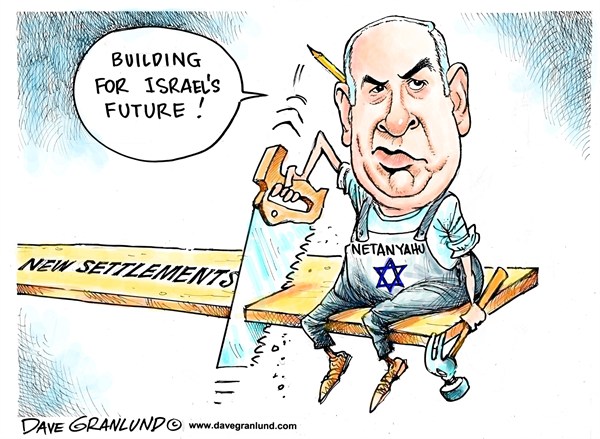
There are several options for U.S. action on this issue, including:
- “Bilaterally recognizing the state of Palestine.”
- “Not using its veto to block the UN Security Council from admitting Palestine as a full UN member state.”
- “Encouraging other countries to recognize Palestine.”

“State of play: U.S. officials said the review of options regarding the recognition of a Palestinian state is one of several issues Blinken asked the State Department to look at.”
- “Blinken also asked for a review of what a demilitarized Palestinian state would look like based on other models from around the world, the two U.S. officials said.”
- “The idea of a demilitarized Palestinian state is something Israeli Prime Minister Benjamin Netanyahu proposed several times between 2009 and 2015 but hasn’t referred to it in recent years.”
- “The purpose of such a review is to look at options for how a two-state solution can be implemented in a way that assures security for Israel, a U.S. official said.”

“What they’re saying: The U.S. official said the White House is aware of the 2 reviews.”
- “A White House National Security Council spokesperson said it “has been long-standing U.S. policy that any recognition of a Palestinian state must come through direct negotiations between the parties rather than through unilateral recognition at the UN. That policy has not changed.”
- “Flashback: The State Department under the Obama administration did look at the issue of recognition of a Palestinian state, including after the Palestinian Authority sought recognition as a full member state at the UN in 2011.”
- “At the time, the State Department prepared a substantial paper on the issue but it wasn’t discussed inside the administration as a serious option, according to an official briefed on the paper.”
- “The UN General Assembly accepted Palestine as an observer state in 2012 but did not give it full membership.”
“Zoom out: British Foreign Minister David Cameron said on Monday the U.K. is considering recognition of Palestine as part of its plans for the day after the war in Gaza and as a way to give the Palestinians a political horizon.”
- “We — with allies — will look at the issue of recognizing a Palestinian state, including at the United Nations … that could be one of the things that helps to make this process irreversible,” he said.”
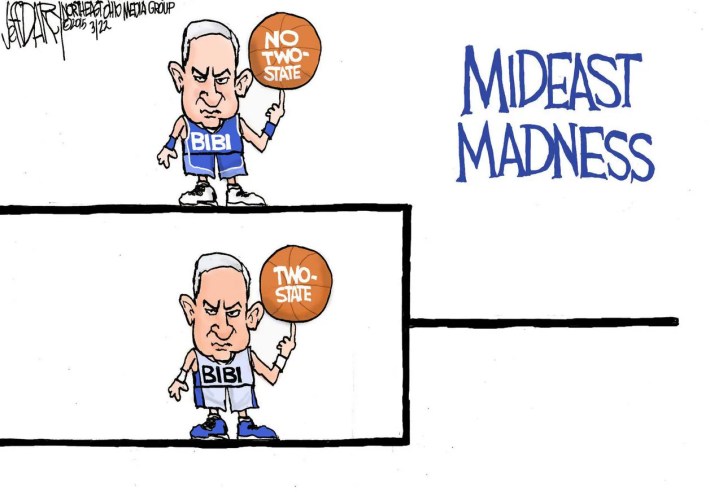 “Reality check: Netanyahu, who has long opposed a two-state solution, has recently rejected calls for Palestinian sovereignty.”
- “Netanyahu’s government includes ultranationalists who oppose even small overtures to the Palestinians. U.S. officials have admitted it’s extremely unlikely they’d agree to a path toward a future Palestinian state.”
“What to watch: Blinken is expected to meet with Israeli Minister for Strategic Affairs Ron Dermer later and discuss the situation in Gaza, plans for the day after the war and the possibility of normalization with Saudi Arabia.”
- “Dermer met Wednesday morning with White House national security adviser Jake Sullivan for a similar discussion, a U.S. official said.”


Recognizing is one thing helping it into reality is another….I do not trust Biden or many of the Dems. chuq
LikeLiked by 1 person
It’s about bloody well time. That it took the mutders of over 25,000 Palestinian is still uncons ionable! ‘Yahoo still has to answer for them!
LikeLiked by 1 person